
Legal considerations when buying rural property in Spain
A guide to the risks of buying property on rural land. Some buyers have encountered problems in these situations; we explain the risks before you buy.
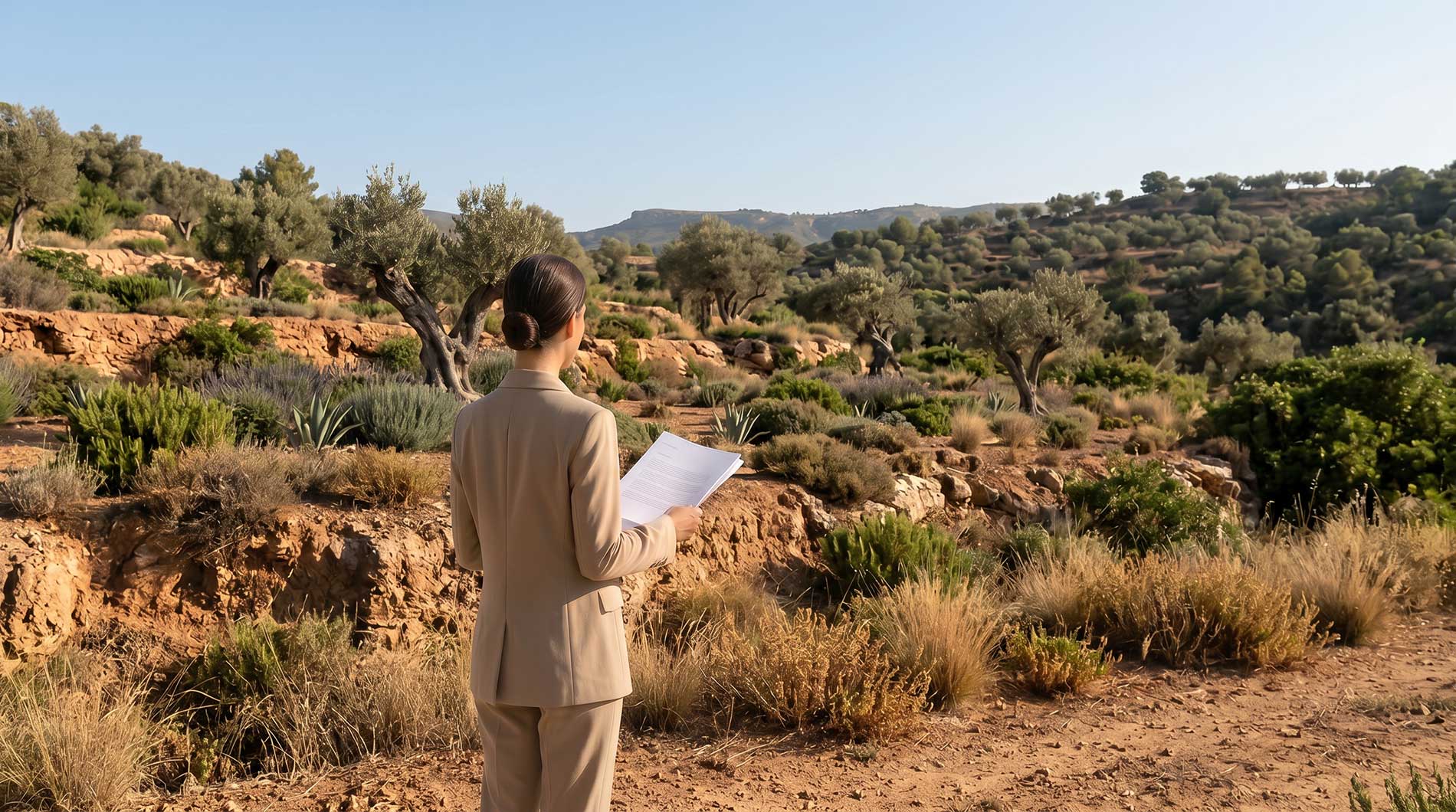
Buying rural property in Spain (technically described as property on “suelo rústico”, or rural land) requires a clear understanding of the current legal and planning framework. Many international buyers are attracted by the privacy and space, but often underestimate the administrative complexity surrounding rural assets. The Spanish system clearly distinguishes between urban land and land not designated for development. This classification directly affects what can be registered or financed. A proper legal review is essential before making any commitment. Understanding the nature of rural property in Spain is the first step towards a secure purchase.
Contents
- Who determines whether a property is classified as rural?
- What happens if I buy an unlawful rural property in Spain?
- Can an unlawful structure be regularised?
- Signing a contract without understanding it.
- Can I get a mortgage for rural property in Spain?
- How can I avoid planning problems?
- What can be built on rural land?
- Can I find out the true value of a rural property to avoid overpaying?
- Be cautious with estate agents.
- Hiring a property lawyer for this type of purchase.
This guide forms part of our comprehensive legal analysis of international property purchases. It is linked to our recent resources on “What foreign buyers discover too late” and residence planning.
Who determines whether a property is classified as rural?
The classification is determined by public authorities through planning regulations. The local council defines land use through its general municipal development plan. The regional government also applies additional rules depending on the autonomous community. This classification is not negotiable and has serious legal consequences. You should consult official planning records to verify who determines a property’s rural classification.
You can consult a property lawyer about this or, better still, a lawyer specialising in planning law, such as our team.
What happens if I buy an unlawful rural property in Spain?
Acquiring a property with irregularities can create significant legal and financial exposure. Administrative authorities may initiate penalty proceedings or proceedings to restore compliance, depending on the seriousness of the breach. These situations can affect the home’s future use and market value. The risk profile depends entirely on planning compliance. You should verify the status of the building before buying an unlawful rural property in Spain.
What exactly do we mean by “unlawful”? Rural land in Spain is subject to a wide range of requirements and restrictions, which means that many buildings on this type of land may not fully comply with current planning regulations. In many cases, these properties were built without the necessary permits or outside the applicable legal framework. This may be the case, but it cannot be assumed without proper verification. Before signing any reservation agreement or purchase contract, it is therefore essential to carry out comprehensive legal due diligence on the property.
Can an unlawful structure be regularised?
Some properties with irregularities may qualify for planning regularisation, depending on the applicable regional and municipal legislation. These procedures vary considerably between autonomous communities and must be assessed on a case-by-case basis.
In certain regions, such as Andalusia, administrative mechanisms such as AFO (Asimilado al régimen de Fuera de Ordenación, a status assimilated to the out-of-plan regime) may apply under specific legal conditions. This status does not fully legalise the property. It recognises the existing building but imposes strict limitations on its use, renovation and rights to future extensions.
To assess the legal status of a rural property correctly, it is essential to obtain an official planning certificate or report issued by the relevant local council. This document can confirm the land classification and whether penalty proceedings are pending or have become time-barred. A specialist planning lawyer should verify the land classification, confirm regulatory compliance and review all existing structures, including swimming pools and outbuildings, to determine whether they are licensed or affected by irregularities.
Signing a contract without understanding it
Signing a contract without understanding it is a dangerous mistake in the rural property market. These assets are often sold through binding private contracts with strict penalty clauses. Signing without a legal review may result in losing your 10% deposit. You could inadvertently accept hidden liabilities or environmental debts. Seeking expert advice before making a legal commitment is essential.
Can I get a mortgage for rural property in Spain?
Financing property on rural land is generally more complex than financing urban property because of the greater legal and valuation risks involved. Spanish banks tend to apply more conservative lending criteria, with loan-to-value ratios typically ranging from 50% to 70% for non-resident buyers.
The property’s legal and planning status is a key factor in mortgage approval. Properties that are fully registered in the Land Registry and have no planning irregularities are generally more likely to be considered suitable security by financial institutions.
How can I avoid planning problems?
Verification is essential when buying a home in the countryside. Buyers should confirm the land classification and that there are no administrative proceedings. Planning restrictions may affect your renovation rights or future development. A properly structured due diligence process reduces your exposure to risk.
What can be built on rural land?
Building is heavily restricted under Spanish land law. In most cases, only maintenance work or minor renovations are allowed. New buildings are subject to strict minimum plot size requirements, which may range from 10,000 to 25,000 m² depending on the area. You should examine regional legislation to find out exactly what can be built on each plot.
Can I find out the true value of a rural property to avoid overpaying?
Market value should be assessed through an independent valuation. Rural property prices are often influenced by subjective factors rather than market data. The tax authority also sets reference values for tax purposes. A proper valuation ensures that the price reflects reality and avoids subsequent tax surprises.
Be cautious with estate agents
You should be cautious with estate agents during negotiations. Agents may not always be fully aware of the land’s actual legal status. Their role is primarily commercial and focused on closing the transaction. They are not responsible for the legal review or planning verification. You need an independent assessment to protect your interests.
Hiring a property lawyer for this type of purchase
Hiring a property lawyer is strongly recommended for international buyers. Legal professionals carry out a comprehensive review, including Land Registry checks, planning review and contract analysis, to ensure that the transaction is legally sound.
As a firm specialising in planning law, we also bring extensive expertise in the regulatory framework governing rural land. This area of law is particularly relevant in Spain, as it determines in detail what can be built, altered or maintained, as well as the legal restrictions applicable to each specific plot under regional planning rules.
Conclusion
Buying a home in the countryside can be a secure and valuable investment with the right analysis. It requires a combination of enthusiasm for the lifestyle and technical legal rigour. Most risks arise from incomplete checks before signing. At Legal Nest Group, we provide the security you need for your international project. Our team handles the bureaucracy surrounding your rural property in Spain so that you can focus on enjoying your new home.